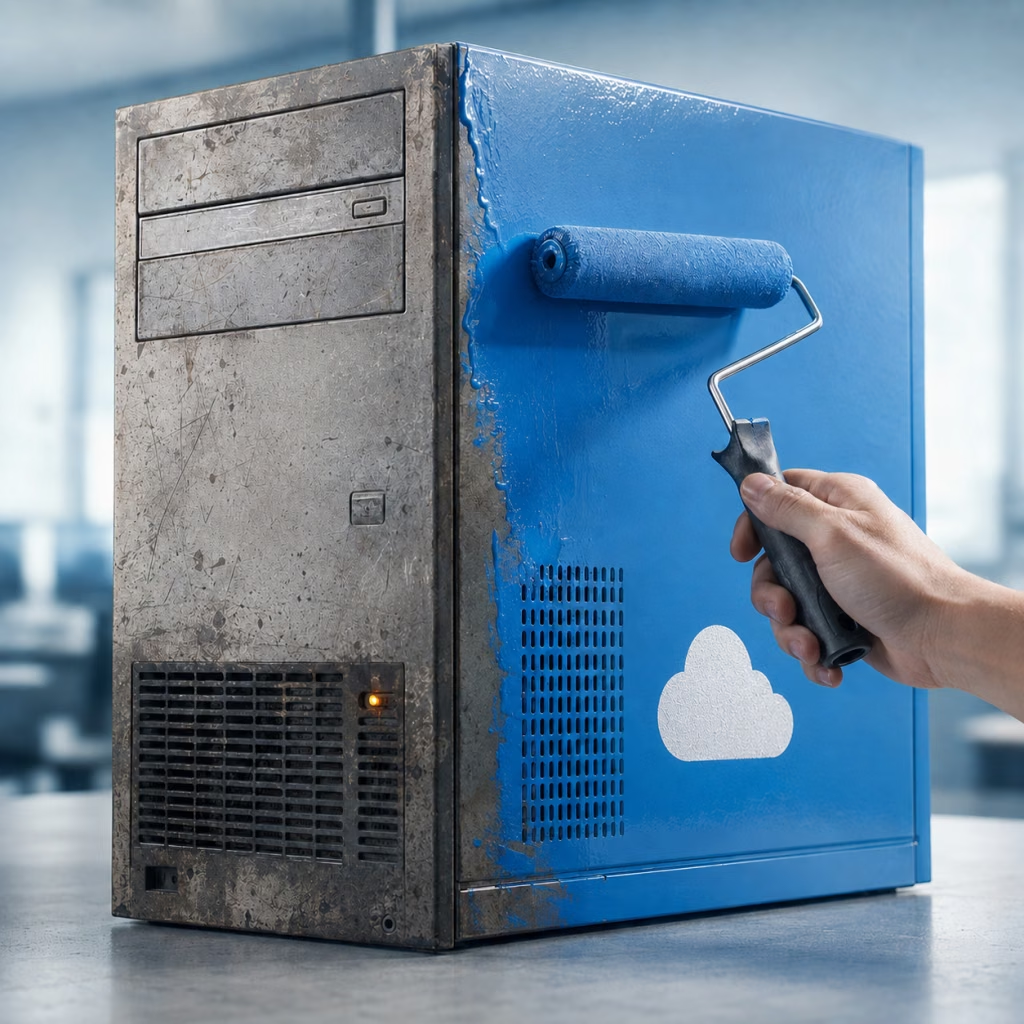
No word in public safety software stretches further than “cloud.” It covers a genuinely modern platform and a fifteen-year-old system humming on a server in a back room, and it stretches that far on purpose. When one word can mean five different architectures, a vendor can promise what you want and hand over what they already have, and the gap doesn’t surface until the system is live, the contract is signed, and switching out is a multi-year problem.
Cloud-Washing: The Word Doing All the Work
There’s a name for this. Cloud-washing is what happens when a vendor takes an old delivery model, wraps it in the language of the cloud, and counts on the buyer not knowing the difference. It’s the same move greenwashing made for sustainability: borrow the credibility of a word without doing the work behind it.
In public safety, when your CAD is oversold and underdelivered, you risk finding out at the worst possible moment: in the middle of peak loads or a major event.
It works because the differences are real but invisible on a slide. “Hosted,” “cloud-based,” and “cloud-native” can sit in the same sentence of an RFP response and sound interchangeable. They aren’t. One updates itself overnight and scales when your call volume spikes. Another is a single server someone has to patch, back up, and pray over. The words look similar. What they do on your worst day does not.
One Word, Five Very Different Systems
Strip out the marketing and there are five delivery models hiding under the word “cloud.”
They aren’t variations on a theme. They’re different systems with different failure points, and only one of them earns the word outright. Here’s what each one actually is, and what it quietly is not.
ModelDescriptionOn-premises
What it is:
Software on servers you own, in your building, maintained by your team.
What it isn’t:
Cloud, in any form. Nothing is off-site or vendor-run.
Hybrid
What it is:
A split setup: some pieces on-site, some wired to off-site infrastructure.
What it isn’t:
Fully cloud. You still own and maintain on-prem hardware.
Hosted
What it is:
The same traditional software, running on a server in the vendor’s facility and reached through a remote desktop.
What it isn’t:
Cloud-native. It’s a single-server system that just changed buildings.
Cloud-based
What it is:
A “lift and shift”: legacy software lifted off a local server and dropped onto rented cloud hardware. Sitting on cloud hardware isn’t the same as being cloud, because the software itself was never rebuilt for it.
What it isn’t:
Built for the cloud. It’s old architecture on new real estate, so it can’t scale or self-update like the real thing.
Cloud-native
What it is:
Software built for the cloud from the first line of code: it scales on demand, updates continuously with no downtime, and recovers on its own. It runs anywhere with a connection, so dispatch keeps going from a backup center or during an emergency.
What it isn’t:
A relabeled legacy system. No back-room server, no single box to babysit.
The pattern is hard to miss. Four of the five borrow the word. One of them is built on it.
The word “cloud” is free. The architecture that earns it is not.
The Pitch Says Cloud. The Demo Says Otherwise.
A CAD vendor will agree to almost anything in an RFP. Yes, it’s cloud. Yes, it does everything on the list. Every box checked, every requirement met. Then the demo starts, and the “cloud” turns out to be a remote-desktop session into a server in a back room. Nothing in the pitch was false. It just wasn’t what anyone thought they were buying.
Sometimes it’s subtler than a back-room server. The software really does run in a name-brand cloud like AWS, and the vendor points to that as proof. But a legacy system lifted onto a rented cloud server is still a legacy system. It sits there as one fixed instance, updated on the old schedule, unable to scale or recover the way the environment allows. Being in AWS is not the same as being built for it. That distinction, infrastructure versus architecture, is the whole ballgame, and it’s exactly the part cloud-washing is designed to blur.
The questions that cut through it are ones a slide can’t dodge. Where does the software physically run, and if it’s in the cloud, was it built there or moved there? What happens to dispatch when local hardware or power goes down? Who installs updates, and does the system go offline while they do it? A cloud-native platform answers all three without flinching. A repainted one starts negotiating with the question.
Cloud-Native Is an Architecture, Not a Label
The reason the distinction matters isn’t technical pride. It’s what the system does on your worst day. A cloud-native platform scales when call volume spikes during a major incident, because it was built to draw on capacity the moment it needs it, not to lean on one server that can only do so much. It updates continuously with no downtime, so fixes and improvements land without a maintenance window that takes dispatch offline. And it recovers on its own, without someone driving to a back room to restart a box.
This is what 10-8 Systems is. Cloud-native from the first line of code, hosted on AWS GovCloud, which is built for the security and compliance public safety operations carry. It’s available through AWS Marketplace, so an agency can buy it the way it already buys cloud, including against existing AWS credits. The AWS part matters, but not the way cloud-washing uses it. We aren’t in AWS as a talking point. We’re in it because the platform was designed to use what it offers.
Every vendor can say the word. Fewer can show you the architecture underneath it, and that’s the part that decides whether a system holds when the pressure is real. Cloud-native isn’t a line on a slide. It’s the difference between a platform built for the environment public safety actually operates in and one that’s just visiting.
Questions Worth Asking Before You Sign
A quick field guide for separating cloud-native from cloud-washed.
Q Is a hosted system the same as cloud?
No. Hosted just means the software runs on a traditional server in the vendor’s building instead of yours, reached through a remote connection. Quick test: if there’s one specific box the whole thing depends on, it’s hosted, not cloud.
Q What should we ask a vendor that says they’re cloud?
Three questions do most of the work. Where does the software physically run, and was it built in the cloud or moved there? What happens to dispatch if hardware or power goes down? Who installs updates, and does the system go offline while they do it? Cloud-native answers all three cleanly. Anything else starts to hedge.
Q Is cloud-native secure enough for public safety?
Yes. 10-8 Systems runs on AWS GovCloud, which is built specifically for the security and compliance requirements government and public safety operations carry. Cloud-native and secure aren’t a tradeoff. The right architecture is what makes both possible.
Every vendor says cloud. Fewer can show you the architecture underneath the word. If you’re evaluating CAD and want to know exactly what you’d be buying, talk to 10-8 Systems. We’ll show you what cloud-native actually looks like, not just the word on the slide.