Miss part 1? Find it here: What Really Happens Inside Dispatch When an Incident Unfolds
Public safety operations today look very different than they did even ten years ago.
Call volumes are up. Staffing shortages are common. Overtime isn’t unusual, it’s expected. Hiring takes longer, and burnout is something agencies are actively trying to manage. At the same time, expectations from the public have increased. Communities expect faster response, clearer communication, and greater accountability. That pressure doesn’t sit in one place. It sits on dispatchers, supervisors, and responders every shift.
On most days, agencies make it work.
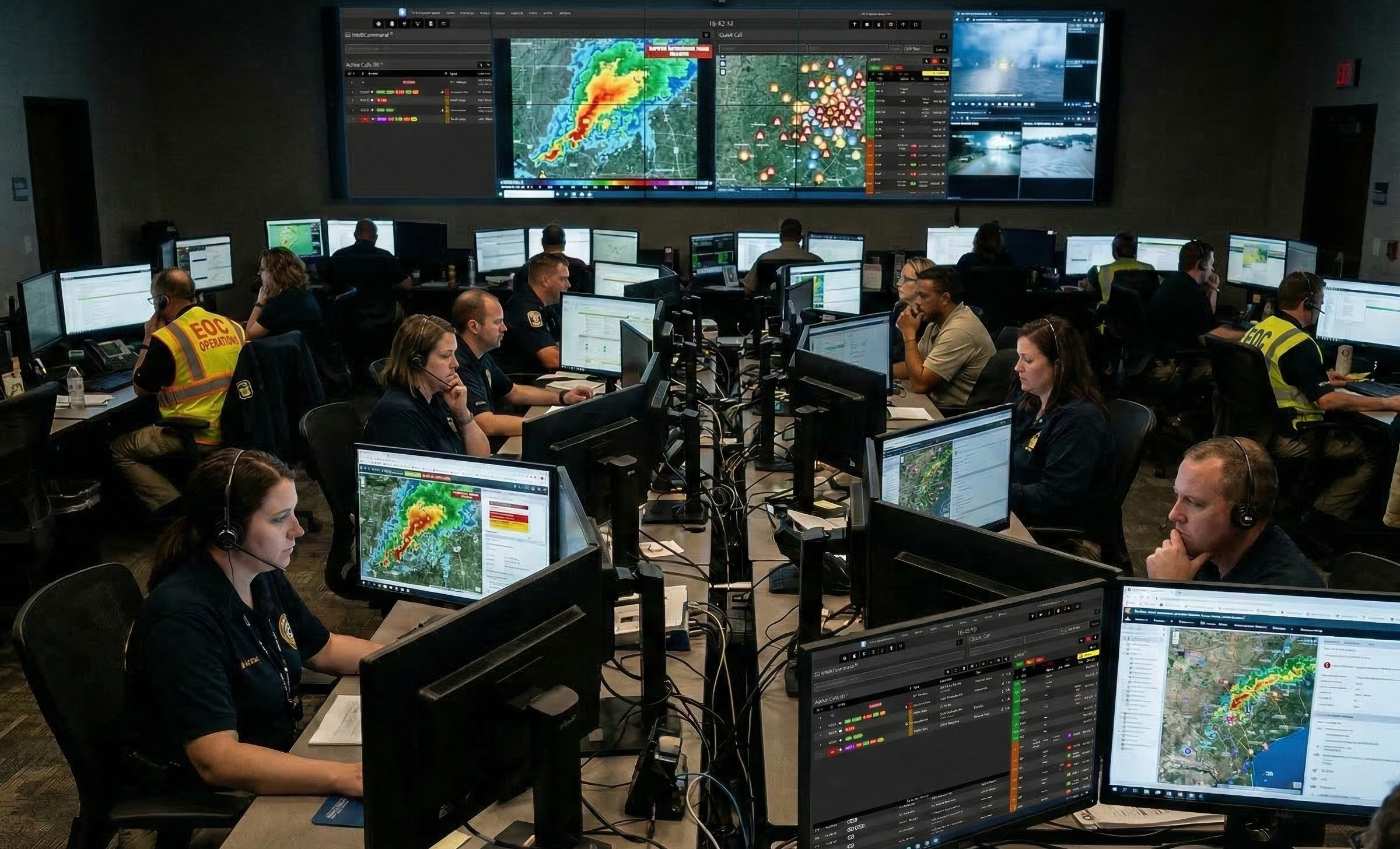
Where you really see the strain is during prolonged or large-scale events. A winter storm that stretches for days. A tornado that moves across multiple counties. Flooding that impacts an entire region. Those are the moments when you find out whether the infrastructure behind the operation can keep up.
During one tornado event, call volume and system activity climbed so high that a statewide CAD platform crashed. Every post was affected. While agencies were dealing with destruction and life-safety incidents, they had to fall back to pen and paper just to track units and calls. The tornado didn’t slow down because the system went offline. Calls kept coming in. Units still had to be dispatched. Documentation still had to be captured.
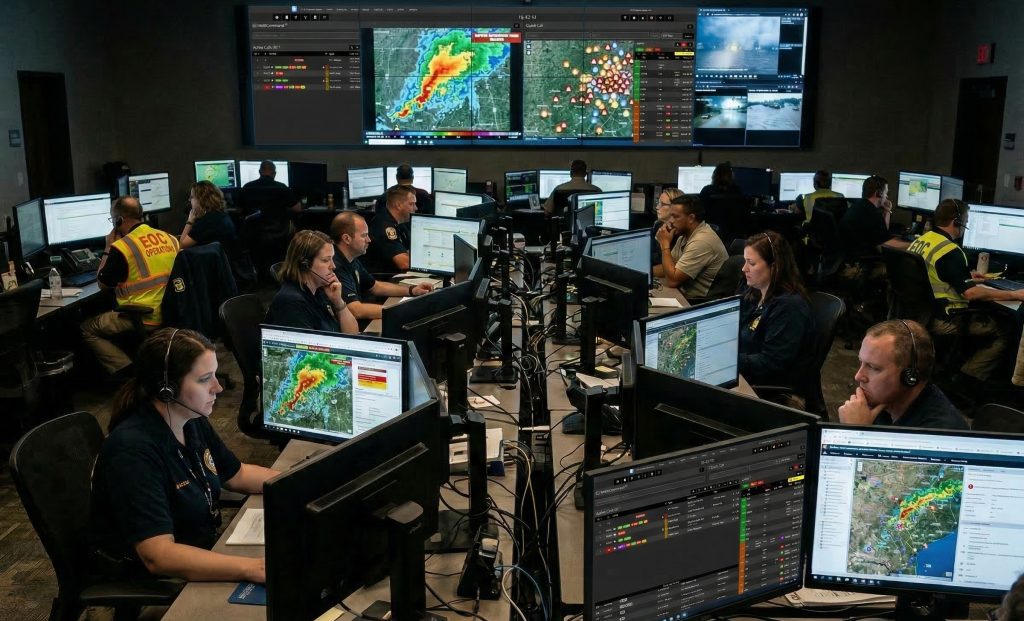
In another case involving severe flooding, one post had more than 600 active calls on the screen. The platform could not handle that load and failed again. The vendor’s solution was to close some calls to reduce the strain on the system. That wasn’t a practical answer. Those were active incidents tied to real people waiting for help.
When a system fails under stress, it isn’t just an operational inconvenience. It creates exposure. Agencies still have to answer open records requests. They still have to account for response times, unit activity, and decision making. Reconstructing that later from handwritten notes introduces gaps and inconsistencies, even if everyone did the best they could at the time. That kind of documentation risk can follow an agency long after the disaster is over.
Budget pressure adds another layer to the challenge. Leadership is balancing vehicles, equipment, staffing, and infrastructure. Dispatch systems are not always as visible as patrol cars or radios, even though they sit at the center of every response. It can feel safer to stay with a familiar vendor than to take a chance on something new, especially in a field where trust has to be earned.
There is also a natural skepticism in public safety. Many agencies have seen platforms that looked polished during demonstrations but struggled once deployed. When the stakes involve life safety and liability, familiarity often feels less risky than change, even if the current system has obvious limitations.
As a result, agencies learn to manage around constraints. They build workarounds. They accept downtime for updates. They budget for additional hardware to handle growth. They operate knowing that during extreme events, performance may degrade.
Most of the time, those adjustments are enough.
But the real measure of a dispatch platform isn’t how it performs on a routine day. It’s how it performs when call volume jumps from single digits to hundreds of active incidents, when multiple jurisdictions are operating together, and when responders are already stretched thin. In those moments, reliability isn’t about convenience or preference. It’s about whether coordination holds together when everything else is under pressure.
Public safety today is not less complex than it used to be. The question is whether the infrastructure supporting that complexity has kept pace.